

 By
By Introduction
When it comes to grazing livestock like cattle, understanding how their cow sigestive system works is crucial not only for animal health but also for pasture efficiency, sustainable feeding, and optimized weight gain. At the core of this biological marvel is the cow digestive system, specifically adapted for breaking down fibrous plant material that most animals can’t digest. Cows aren’t just animals that eat grass they are complex biological machines, powered by a four-chambered stomach designed to ferment, digest, and absorb nutrients slowly and efficiently.
In 2025, as American farmers focus more on regenerative agriculture, pasture-based feeding, and rising feed costs, a clear understanding of how cows process what they eat becomes a powerful tool. In this article, we’ll explore each chamber of the cow’s stomach, how it supports grazing behavior, key differences vs. monogastric animals, and how this impacts feed strategies on U.S. farms today.
What Makes the Cow Digestive System Unique?
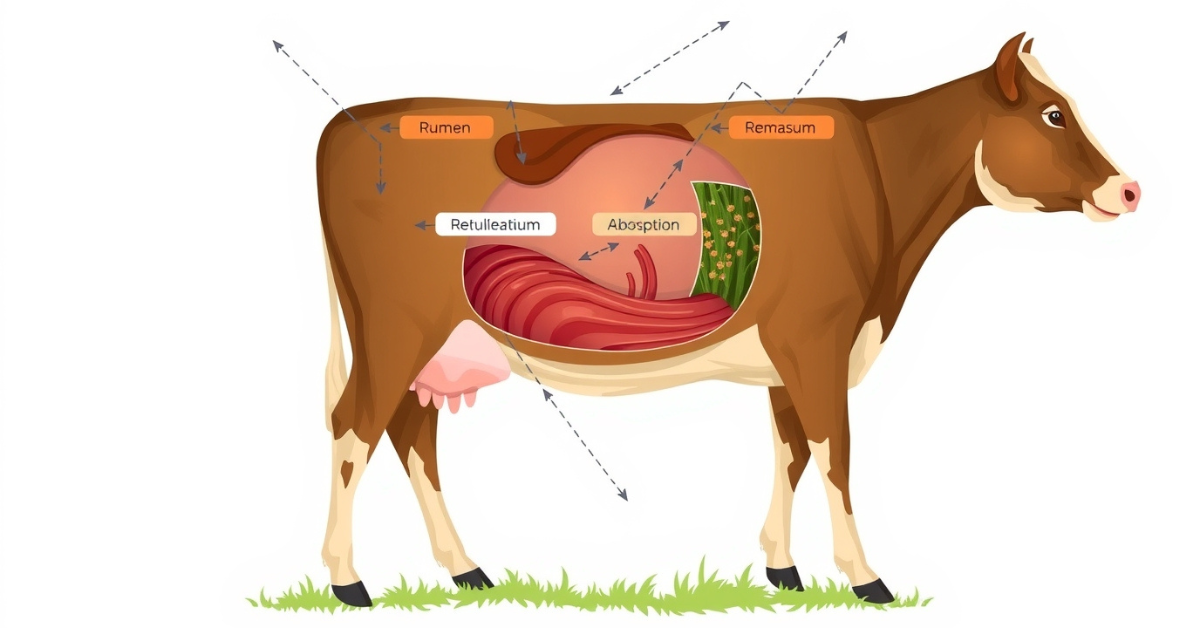
Unlike monogastric (single-stomach) animals like pigs and humans, cows are ruminants animals that have evolved to graze and digest high-cellulose plant matter. The defining trait is a four-chambered stomach, consisting of:
- Rumen
- Reticulum
- Omasum
- Abomasum
Together, these chambers give cows the biological equipment to:
- Ferment fibrous grasses
- Absorb volatile fatty acids (VFAs)
- Extract protein from microbial digestion
- Re-chew their cud for better breakdown
This multi-phase digestion maximizes nutrient absorption essential for grazing animals consuming low-energy diets.
Overview of the Four Compartments
Here’s a breakdown of what each compartment does:
| Compartment | Function |
| Rumen | Fermentation and microbial breakdown of fiber |
| Reticulum | Cud regulation and particle separation |
| Omasum | Water and VFA absorption |
| Abomasum | Acidic digestion (similar to monogastrics) |
Each section works in coordination to ensure that plant material is progressively processed, fermented, re-chewed, and finally digested with enzymes.
Fun Fact: The rumen of an adult cow can hold 40 to 60 gallons of ingestive material—primarily grass and liquid content!
The Role of Microbes and Fermentation
Cow Digestive System the heart of a cow’s digestive efficiency is microbial fermentation. The cow itself does not digest plant fiber instead, it hosts billions of microbes (bacteria, protozoa, and fungi) that do the job.
Key Microbial Roles
- Break down complex cellulose
- Convert fiber into volatile fatty acids (VFAs): acetate, propionate, butyrate
- Produce microbial protein an essential nutrient for the cow
| Microbial Benefit | Function |
| Acetate production | Fat synthesis and milk production |
| Propionate production | Glucose generation |
| Methanogenic bacteria | Convert hydrogen to methane (byproduct) |
Modern grazing strategies in 2025 often include probiotics or yeast supplements to improve microbial diversity and reduce methane output.
Rumen Function and Fiber Breakdown
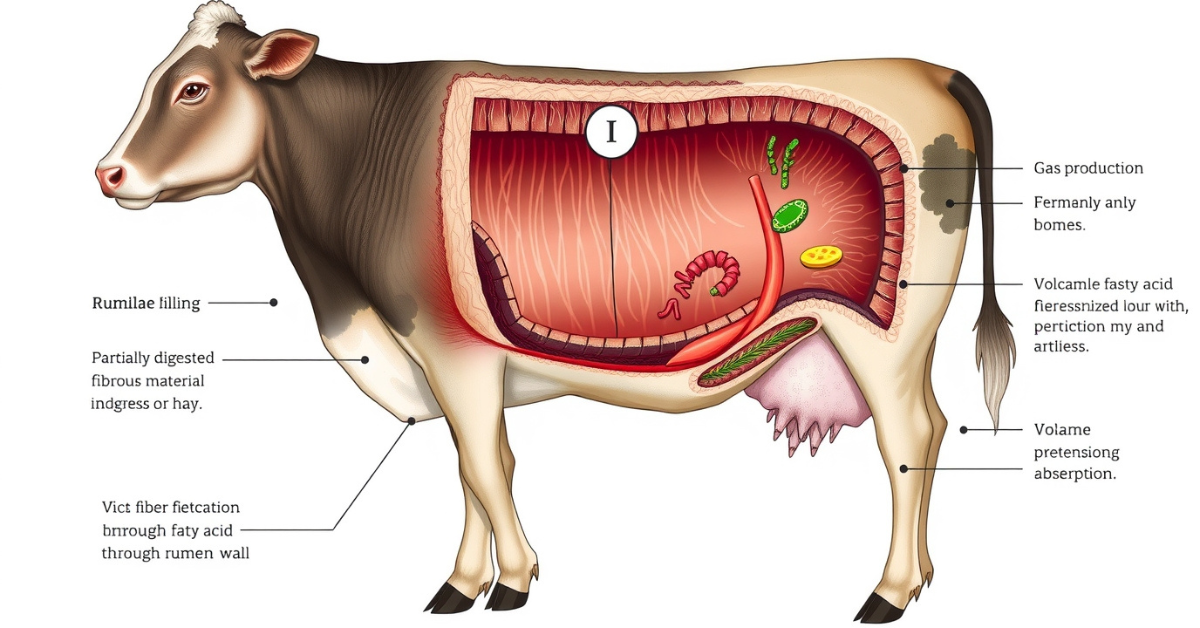
The rumen is the largest chamber, and it acts as a massive fermentation vat. It is lined with papillae to increase surface area for VFA absorption. As cows eat, the rumen immediately begins to:
- Mix feed with saliva
- Ferment with microbes
- Produce heat and gases
- Initiate the formation of cud
Chewing cud a behavior known as rumination means re-chewing partially digested food for better breakdown. This slows down digestion for more thorough processing.
Rumen Key Stats:
- pH range: 5.5–7
- Temp: ~102°F
- Microbial biomass: Over 100 billion organisms per gram
Reticulum: The Gatekeeper of Ruminants
The reticulum is a small, honeycomb-structured chamber that works closely with the rumen. Often referred to as the “hardware stomach,” it traps foreign objects (like nails or wire) to prevent harm.
Its key functions include:
- Filtering particles
- Regurgitating food for rumination
- Controlling passage to the omasum
It plays a regulatory role in ensuring only partially digested, small-enough particles move forward in the system.
Omasum: The Nutrient Filter
The omasum resembles pages in a book and acts primarily to squeeze and filter the mash coming from the reticulum. It absorbs water, electrolytes, and some VFAs.
Its folds increase surface area dramatically, allowing for:
- Efficient nutrient screening
- Water reabsorption (important for hydration)
- Particle size reduction before moving to the abomasum
In grazing systems, this chamber supports fluid efficiency, allowing for better hydration with minimal water waste.
Abomasum: The True Stomach
Known as the “true stomach,” the abomasum functions similarly to a human stomach.
It secretes:
- Hydrochloric acid to kill bacteria
- Enzymes like pepsin for protein digestion
Here, microbial proteins and bypass nutrients are digested for absorption in the intestines, ensuring the cow gains real nutritional value from pasture-based feeding.
Comparing Cow Digestion vs. Monogastrics
To understand how efficient cows are at utilizing roughage, let’s contrast their system with monogastric animals:
| Trait | Cow (Ruminant) | Pig (Monogastric) |
| Stomach Compartments | 4 | 1 |
| Fiber Digestion Efficiency | High (via microbes) | Low |
| Saliva Production | ~50 liters/day | ~15 liters/day |
| Ability to Chew Cud | Yes | No |
| Post-Gastric Fermentation | Minimal | Minimal |
While pigs excel at digesting grains, cows are optimized for grazing and forage, making them perfect for pasture-based systems.
Impact of Digestive Health on Grazing Efficiency
A healthy Cow Digestive System directly leads to improvements in:
- Average daily gains (ADG)
- Milk production
- Body condition scores (BCS)
- Feed conversion rates (FCR)
Common Issues When Digestion is Disrupted
- Acidosis from too much grain
- Bloat due to rapid fermentation
- Reduced VFA absorption from improper forage quality
In 2025, Cow Digestive System grazing operations are leaning on precision pasture management and real-time rumen monitoring technology to maintain optimal digestion.
Feeding Strategies That Support Digestion
Ensuring a healthy Cow Digestive System tract requires intentional feeding, especially when transitioning between rations or pastures.
Tips for Optimized Cattle Digestion
- Maintain consistent forage quality
- Avoid sudden diet changes
- Supplement with minerals and probiotics
- Use high-roughage diets for rumen health
- Provide constant access to clean water
Modern grazing tools in 2025 include pasture meters, GPS collars tracking intake time, and digestibility sensors within boluses making nutrition smarter and data-driven.
Data & Visuals Section
Chart
| Stomach Section | Main Absorbed Nutrient |
| Rumen | VFAs (energy source) |
| Omasum | Water, VFAs, electrolytes |
| Abomasum | Proteins, minerals |
Estimated Grazing Efficiency by Digestive Health
| Digestive Status | Feed Conversion Rate (lbs gain/DM) |
| Optimal Digestive Health | 6.5:1 |
| Subclinical Acidosis | 4.2:1 |
| Chronic Bloat | 3.8:1 |
FAQs
Why do cows have four stomachs?
The purpose of their four stomachs is to efficiently break down fibrous plant materials through compartmental digestion.
Do cows chew their food only once?
No. They regurgitate and rechew cud multiple times for better digestion.
Can you feed high grain content to cows?
Yes, but too much grain can upset microbial balance and cause acidosis.
What is the most important part of the cow’s stomach?
The rumen is the most important part of the cow’s stomach because it hosts microbes that perform most of the digestion process.
How do I improve rumen health in my herd?
Provide consistent forage, supplement with minerals, avoid diet shocks, and consider probiotics.
Conclusion
The cow digestive system is a marvel of agricultural evolution designed for efficient, fiber-focused digestion that supports productive grazing strategies. Understanding cow digestive system this four-part stomach system works allows farmers and ranchers to build better feed plans, predict performance, and ensure herd health year-round.
From the rumen’s microbial fermentation to the abomasum’s enzymatic digestion, every step matters in maximizing nutrient uptake from pastures. With modern grazing technologies and a science-based approach,cow digestive system grazing cattle in 2025 is as much about biology as it is about technology.