

 By
By Introduction
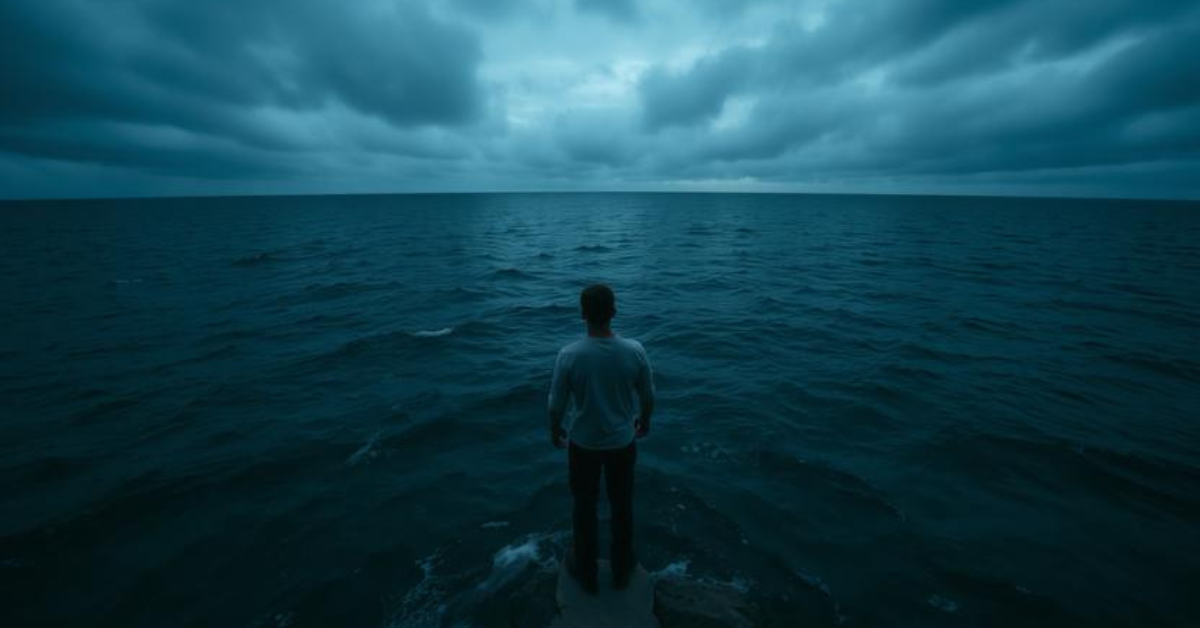
For many in the U.S., the idea of swimming in or even looking at the ocean, a water lake, or a dark pool can spark intense feelings of panic. This fear, clinically known as thalassophobia, is more than just discomfort; it’s a phobia deeply rooted in anxiety, imagination, and often, past experiences.
Deep water phobia refers to a persistent fear of vast, deep bodies of water that feel uncontrollable or dangerous. Though often misunderstood or dismissed, it can have real and limiting impacts on a person’s life, from vacations to careers in marine-related fields. With 2025 seeing a rise in mental health awareness and water-centric experiences like open-water swimming and scuba diving becoming more mainstream, understanding how this fear develops and how to heal from it is more relevant than ever.
This complete guide explores everything from the psychology behind this fear to actionable methods for overcoming it.
What Is Deep Water Phobia?
Deep water phobia is the fear of deep bodies of water, particularly those that are dark, vast, and seem bottomless, like oceans, seas, or large lakes. It’s closely related to thalassophobia, which comes from Greek thalassa (sea) and phobos (fear).
Key Features
- The condition is characterized by a persistent and intense fear of submerged open water.
- Fear may be triggered by the visual alone—photos or videos.
- One may avoid oceans, lakes, or even swimming pools with visible depths due to this fear.
This fear can be connected to both cognitive and physiological responses, often activated by the brain’s interpretation of threat, lack of visibility, or imagined creatures lurking below.
Common Causes Behind the Fear
No one is born afraid of deep water phobia. This fear typically develops due to a combination of genetic influences, learned behavior, and traumatic experiences.
Primary Causes Include
- Trauma or near-drowning events during childhood.
- Second-hand learning, such as hearing others’ stories or warnings, also plays a significant role.
- Films such as Jaws or The Meg often portray these events in a negative light.
- Genetic disposition toward anxiety disorders.
Common Causes vs. Their Triggers
| Cause | Possible Triggering Experience |
| Past Trauma | Almost drowning in the ocean |
| Observational Learning | Watching a scary shark documentary or movie |
| Evolutionary Survival Sense | Fear of unknown threats underneath the water |
| Misinformation | Believing myths like whirlpools or sea monsters |
Often, people can’t name the exact cause it simply feels like a “natural” fear. But understanding origin can be powerful for healing.
Physical and Emotional Symptoms
When facing deep water phobia (or even imagining it), individuals may experience both psychological distress and physical panic responses. These are typical signs of deep water phobia.
Emotional Responses:
- Overwhelming fear, dread, or anxiety
- Uncontrollable thoughts about drowning or unknown threats
- Feelings of helplessness or doom
Physical Symptoms:
- Rapid heartbeat or chest tightening
- Shortness of breath
- Dizziness or nausea
- Sweating or trembling
The fight-or-flight mechanism, especially heightened in phobic individuals, triggers these responses. In fact, 2025 data from the American Psychological Association shows nearly 15% of adults have at least one deep water phobia affecting their daily life.
Thalassophobia vs. Aquaphobia Key Differences
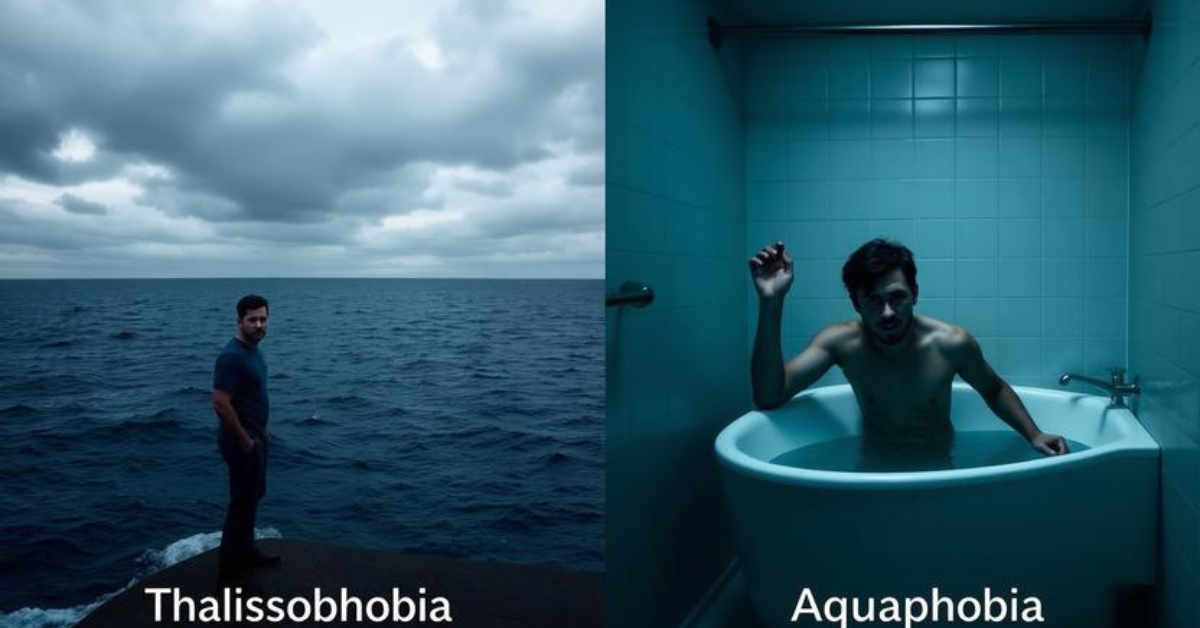
It’s important to not confuse deep water phobia, or thalassophobia, with aqua phobia, though they’re often used interchangeably.
Comparison Table
| Feature | Thalassophobia | Aquaphobia |
| Focus of fear | Deep, vast, open water | Water in general |
| Triggers | Oceans, lakes, deep pools | Showers, ponds, or even rain |
| Depth visibility | Fear often comes from not seeing what’s beneath | Not related to depth |
| Nature | Often visual and size-based | More physical-contact-related |
Insight: Deep water phobia is more about the infinite unknown than the element of water itself.
Is This Fear Rational? A Psychological Perspective
This question reflects a deeper curiosity: “Am I overreacting?”
Fear of deep water phobia is not irrational, but it often exaggerates the real risk. According to marine safety stats (NOAA, 2025), the actual likelihood of a fatal ocean incident while swimming in designated areas is less than 0.0001%.
Psychologists explain this as cognitive overgeneralization:
- A single fish could be exaggerated in the mind as a deadly threat.
- Murky water becomes a symbol for “anything could be down there.”
When the subconscious brain doesn’t have visibility or control, it assumes threat a survival mechanism inherited from our caveman brains.
Cultural and Media Influence on Phobias
Pop culture plays a massive role in how Americans associate fear with deep water phobia.
Notable Influencers
- Movies: Jaws, Sharknado, The Shallows
- Documentaries: Shark Week, Sea Rescue
- Games: Subnautica, Raft, Ark
Visual storytelling activates mental imagery, often resulting in lasting memories. In a 2025 study published by UC Berkeley, over 60% of participants who feared the ocean connected it to a movie they watched before age 18.
How it Affects Daily Life and Travel
Living with this fear can significantly restrict lifestyle options:
- Cancelling beach vacations or cruises
- Avoiding coastal cities or islands
- Missing out on hobbies like kayaking, surfing, or diving
- Refusing job opportunities near large bodies of water
Case Study Insight: Catherine, a 32-year-old from Miami, turned down an executive role requiring travel to coastal resorts because she couldn’t fly over open oceans without anxiety medication.
Evidence-Based Treatment Options (2025 Updated)
Thanks to modern psychology and virtual therapy, deep water phobia fear is highly treatable. The latest methods include a blend of cognitive and exposure therapies.
Top Treatments
- Cognitive Behavioral Therapy (CBT): Reframes catastrophic thinking.
- Exposure Therapy: Gradual re-introduction to feared deep water phobia.
- Virtual Reality Therapy: Safe VR programs simulating calm sea environments.
- EMDR: Especially beneficial if trauma triggered the fear.
Insight: Over 72% of patients report reduced symptoms after 6-10 weeks of CBT + VR, according to the American Anxiety Institute.
Tips to Gradually Overcome the Fear
Healing is a process. Progress takes time, and gradual steps are key.
Step-by-Step Tips
- Learn about deep water phobia safety to reduce uncertainty-based panic.
- Start exposure with photos, then move to videos, then real water.
- Try swimming in clear, shallow pools first.
- Practice mindfulness or breathing techniques for when anxiety hits.
- Join forums or support communities healing is easier with support.
When to Seek Professional Help
It’s time to consult a mental health professional if:
- It’s disrupting your quality of life
- You experience panic even near water or images of water
- You’ve avoided family trips or social events because of it
In the U.S., therapy is now more accessible than ever through teletherapists and specialized deep water phobia clinics. Use verified sources like Psychology Today or APA.org to find licensed experts.
FAQs
Is deep water phobia the same as thalassophobia?
No, but they overlap. Thalassophobia is a specific fear of the ocean or vast waters; deep water phobia is a broader fear of depth and darkness in watery environments.
Can you cure deep water phobia permanently?
Yes, with consistent therapy and exposure methods, most people significantly reduce or eliminate their fear.
Which age group is most susceptible to this fear?
Teens and adults aged 18-35 are most commonly affected, especially those exposed to fear-triggering content early.
Are medications needed to treat the fear?
Not always. Therapy usually starts with treatment. Medication may be prescribed for extreme, panic-inducing cases.
Can I scuba dive if I have this fear?
Not safely, at least not until managing or overcoming the fear through gradual treatment strategies.
Conclusion
Deep water phobia may feel isolating, but it’s far more common and treatable than most people realize. Being afraid of the vast unknown under the surface is deeply human. The key is not to let that fear hold you back from living a full life.
Whether through therapy, VR exposure, or community support, your journey to overcoming the fear of deep water can start today. Remember courage doesn’t mean the absence of fear; it means taking action despite it.
Ready to face your fear? Consider speaking to a licensed anxiety therapist or exploring beginner swimming programs designed for deep water phobia recovery.