

 By
By Introduction
Succulents are small, beautiful plants that many people love because they are easy to care for. But even though they need less water than other plants, they can still die quickly if the soil is wrong. Many beginners think they are watering too much or too little, when the real problem is the soil holding too much moisture around the roots.
Succulents naturally grow in dry, rocky places where rain drains away fast. Regular garden soil stays wet for too long, which can cause root rot and weak growth. That is why choosing the right succulent soil is one of the most important steps in keeping your plants healthy.
In this guide, you will learn why special soil matters, what makes a good mix, and how to choose or make the best one for your plants. With the right foundation, your succulents can grow strong, colorful, and healthy all year long.
Why Succulents Need Special Soil
Succulents grow naturally in dry deserts and rocky areas. Rain falls quickly and drains away fast. It doesn’t stay wet for long. But regular garden soil is thick and heavy. It traps water around the roots. When roots sit in water:
- Oxygen cannot reach them
- Fungi begin to grow
- Roots become soft and black
That is why using proper succulent soil is so important. It drains quickly and keeps air pockets in the pot. According to horticulture research updates in 2026 from U.S. university extension programs, poor drainage is still the number one cause of succulent root disease in containers.
Simply put: wet roots equal dead plants.
What is Succulent Soil?
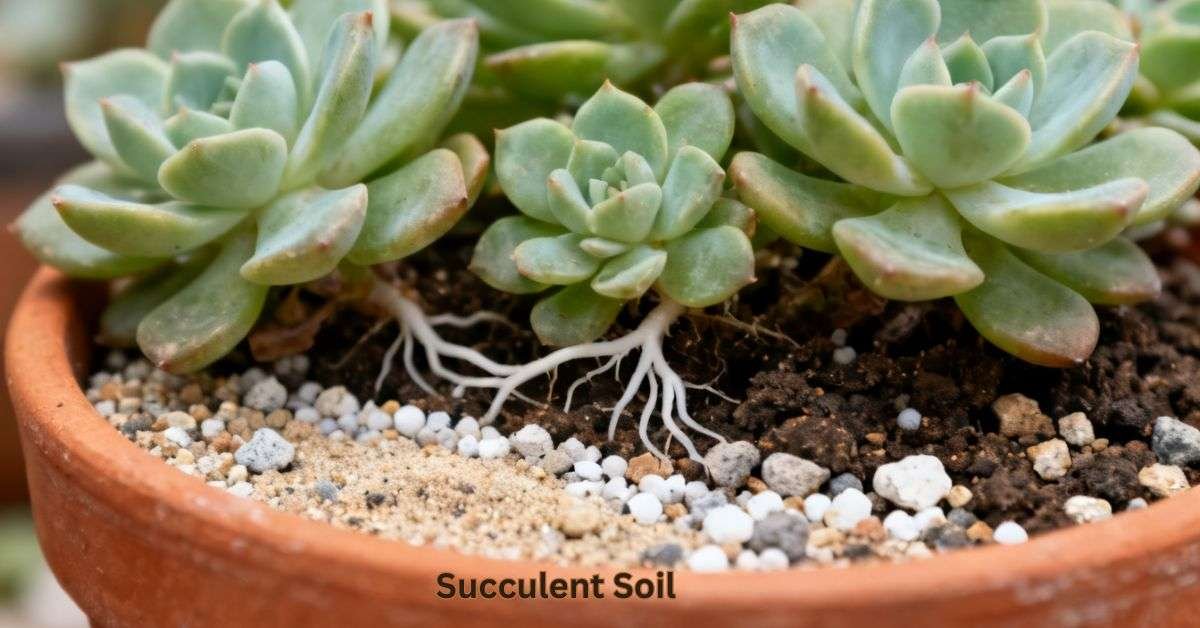
Succulent soil is a special potting mix made to drain water very quickly. It usually contains less organic matter and more mineral material like sand, pumice, or perlite.
Here is a simple definition:
It is a fast-draining growing mix designed to prevent root rot by allowing water to pass through quickly. It should feel gritty, not sticky. When you water it, the water should flow out of the drainage hole within seconds.
Good drainage helps:
- Keep roots healthy
- Prevent fungal problems
- Support strong plant growth
Without the right succulent soil, even perfect watering habits won’t save your plant.
What Makes a Good Succulent Soil Mix?
A healthy mix has two main parts: organic material and mineral material. Organic material gives a small amount of nutrients. Mineral material improves drainage. Below is a simple comparison table.
Ideal Ingredients for Succulent Soil
| Ingredient | What It Does | Why It Helps |
| Coco coir | Holds small amount of moisture | Prevents soil from drying too fast |
| Perlite | Adds air spaces | Improves drainage |
| Pumice | Keeps soil loose | Stops compaction |
| Coarse sand | Increases drainage speed | Reduces water buildup |
| Lava rock | Adds structure | Long-lasting aeration |
A good rule is to use at least 50% mineral material. In humid areas, you may need even more.
Store-Bought vs Homemade Mix
Many garden stores sell cactus and succulent soil. These mixes are easy to use, but not all are perfect. Some store brands still contain too much peat moss. Peat holds water for a long time, which is not ideal for succulents. Making your own mix gives you better control.
Store-Bought vs DIY Succulent Soil
| Feature | Store-Bought Mix | DIY Mix |
| Easy to Use | Yes | Moderate |
| Custom Drainage | Limited | Full control |
| Cost Over Time | Higher | Lower |
| Best for Beginners | Yes | Yes (with guidance) |
If you are new, you can start with a trusted commercial brand. If you want better results, try making your own succulent soil.
Easy DIY Succulent Soil Recipe (2026 Tested)
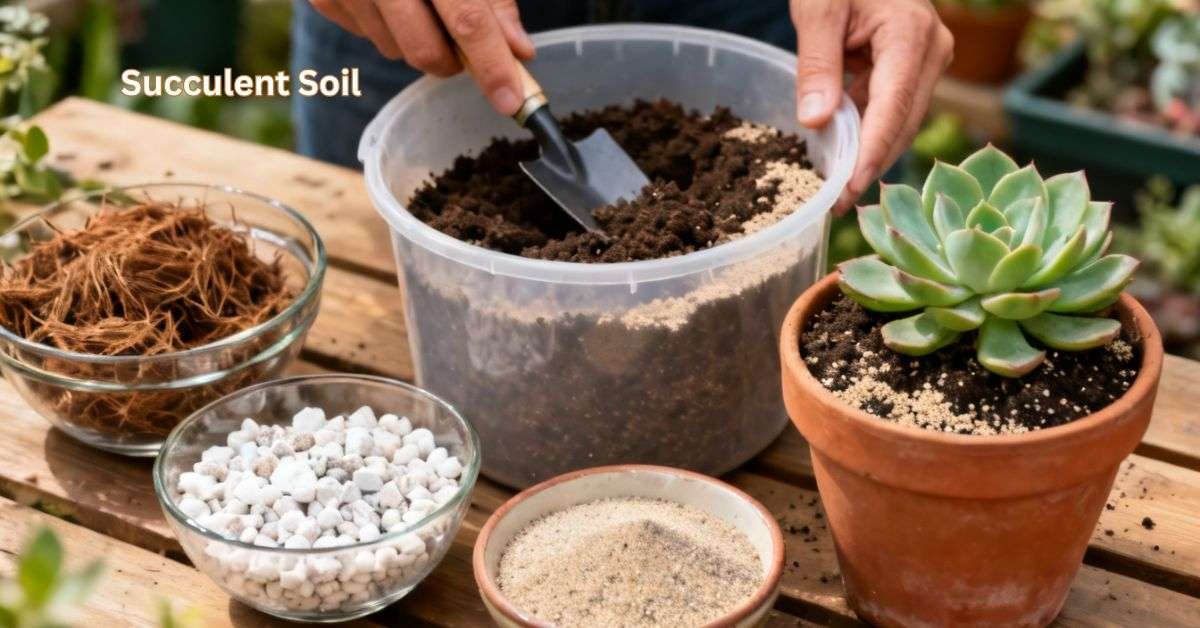
Here is a simple mix that works well for most indoor succulents:
- 1 part coco coir
- 1 part perlite or pumice
- 1 part coarse sand
Mix everything well before using. For humid climates, use:
- 1 part organic material
- 2 parts mineral material
This version dries faster and protects roots. I have personally used this blend for over 10 years with aloe, echeveria, jade plants, and haworthia. Plants dry out within 5–7 days indoors, which is ideal. Always use a pot with a drainage hole. Even the best succulent soil cannot fix a pot without drainage.
Best Soil for Indoor Succulents
Indoor plants dry more slowly because there is less sunlight and airflow.
For indoor growing:
- Increase mineral content
- Avoid heavy peat-based mixes
- Use terracotta pots for better airflow
Terracotta absorbs extra moisture and helps the soil dry faster. If your pot feels heavy three days after watering, the mix may be holding too much moisture.
Best Soil for Outdoor Succulents
Outdoor plants dry faster due to sun and wind. However, rain can cause problems.
For outdoor beds:
- Add crushed granite or lava rock
- Avoid clay-heavy garden soil
- Build raised beds if needed
Raised beds improve drainage and prevent standing water. In very rainy areas, improving succulent soil with extra grit can prevent sudden root rot after storms.
Signs Your Soil is Too Heavy
It is important to notice early warning signs.
Look for:
- Yellow lower leaves
- Mushy stems
- Black roots
- Soil that smells bad
- Fungus gnats flying around
Healthy succulent soil should never smell sour. If your plant shows these signs, remove it from the pot. Cut off damaged roots. Let it dry for one day before repotting in a fresh mix.
How Often Should You Change Succulent Soil?
Over time, soil breaks down and becomes compacted. As organic parts decompose, they hold more moisture. This increases the risk of root problems.
General repotting guide:
- Young plants: every 1 year
- Mature plants: every 2–3 years
- Fast growers: every year
Spring 2026 is still considered the best time to report because plants enter active growth. Refreshing succulent soil helps restore airflow and drainage.
Common Mistakes to Avoid
Many beginners make simple mistakes.
- First, they use regular garden soil. This almost always leads to overwatering problems.
- Second, they use decorative pots without drainage holes.
- Third, they assume all succulents need the same mix. Desert types need more grit than jungle varieties like Christmas cactus.
Another mistake is watering on a strict schedule instead of checking if the soil is fully dry. The right succulent soil works best when combined with smart watering habits.
Sustainable Soil Trends in 2026
In 2026, more gardeners are choosing eco-friendly materials. Peat moss harvesting harms natural wetlands. Many experts now recommend peat-free mixes made with coco coir.
Pumice and lava rock are also popular because they last longer and reduce waste. Choosing sustainable succulent soil protects both your plants and the environment.
FAQs
If I have plants, can I use regular potting soil?
No, it holds too much water and can cause root rot.
How fast should succulent soil drain?
Water should run through within seconds.
Is sand alone enough?
No, it can compact and block airflow.
Do succulents need fertilizer in this soil?
Yes, lightly during the growing season.
Can I reuse old succulent soil?
Only if it is still loose and not compacted.
Conclusion
Growing healthy succulents is much easier when you start with the right soil. These plants do not fail because they are difficult; they fail because their roots stay wet for too long. When you use fast-draining succulent soil, you protect the roots, prevent rot, and create the perfect environment for steady growth.
Remember that succulents prefer dry conditions similar to their natural desert homes. A gritty, well-draining mix helps water move through quickly and allows air to reach the roots. When roots can breathe, plants become stronger and more resistant to disease.
If your succulents have struggled in the past, changing the soil might be the simple solution you need. Check your present mix first, and if you need to, make changes. With the right soil and proper care, your succulents can thrive beautifully for years to come.