

 By
By Introduction
Head pain, injury, or strange symptoms on one side of the head can feel scary. When a doctor recommends a temple scan, many people feel nervous because they don’t know what it means. Is it safe? Does it hurt? Why is it needed?
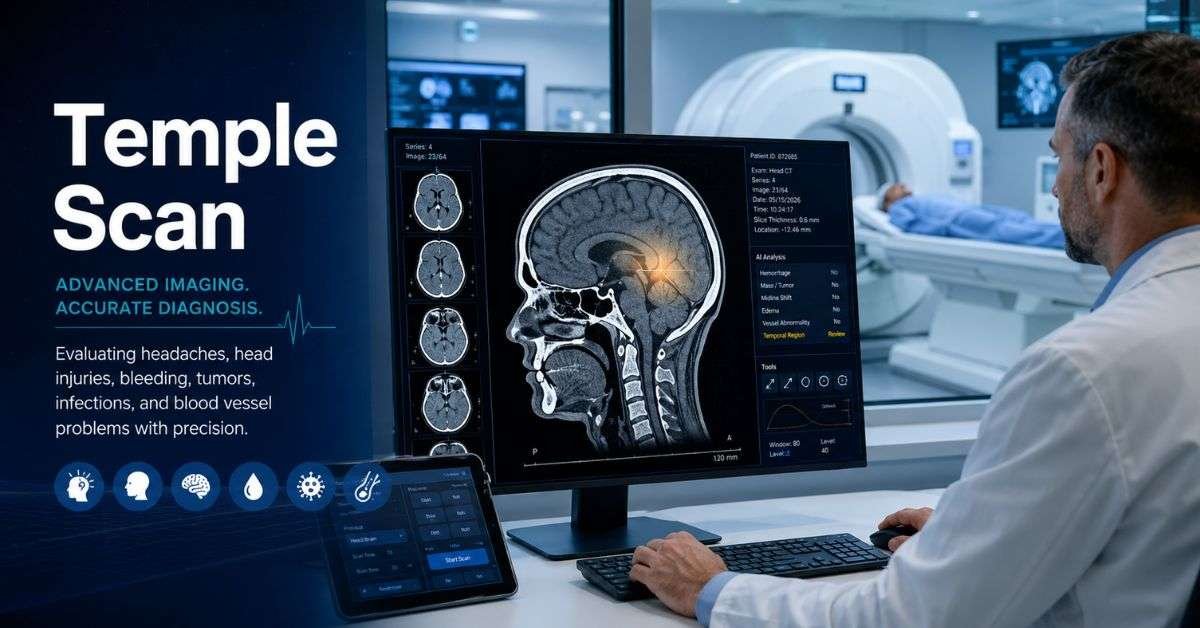
In simple terms, this type of scan is a medical imaging test that looks closely at the side of your head, also called the temporal region. This area includes important parts of the brain, blood vessels, nerves, and bones. In 2026, new technology will make these scans faster, clearer, and safer than ever before.
In this easy guide, you will learn what a temple scan is, when doctors recommend it, how it works, what it costs, and what to expect before and after the test. Everything is explained in clear language so anyone can understand it.
What is a Temple Scan?
A temple scan is an imaging test that checks the side area of your head between your forehead and your ear. This part of the skull protects the temporal lobe of the brain, which helps with memory, hearing, and understanding language.
Doctors use this scan to look for:
- Head injuries
- Swelling or bleeding
- Tumors
- Infections
- Blood vessel problems
The test does not involve surgery. It simply takes detailed pictures of the inside of your head. These images help doctors find problems quickly and start treatment sooner. In emergency rooms, a temple scan is often used after a fall, sports injury, or car accident. In clinics, it may be ordered for ongoing headaches or hearing problems.
Why Doctors Recommend It
Doctors suggest this scan when symptoms appear on one side of the head. Some common reasons include strong headaches, dizziness, confusion, hearing loss, or pain near the jaw.
For example, if someone falls and hits the side of their head, doctors may order a temple scan to check for internal bleeding. If a person has sudden memory issues or seizures, imaging helps rule out serious conditions.
In 2026, medical guidelines recommend early imaging for people with stroke warning signs. Quick scanning can save brain tissue and reduce long-term damage. Studies from major U.S. hospitals show that fast diagnosis improves survival rates. The main goal is simple: find the cause of symptoms quickly and safely.
Types of Imaging Used
There is more than one way to perform a temple scan. Doctors choose the best method based on the problem they suspect.
Main Imaging Methods
| Imaging Type | Best For | Uses Radiation? | Time Needed |
| CT Scan | Injuries, fractures, bleeding | Yes (low dose) | 5–10 minutes |
| MRI | Tumors, soft tissue, nerves | No | 20–45 minutes |
| Ultrasound | Artery inflammation | No | 15–30 minutes |
A CT scan is usually used in emergencies because it is very fast. MRI takes longer but gives clearer pictures of soft tissues like the brain. Ultrasound is helpful for checking blood vessels near the temple. Your doctor decides which type is right for your condition.
How the Procedure Works
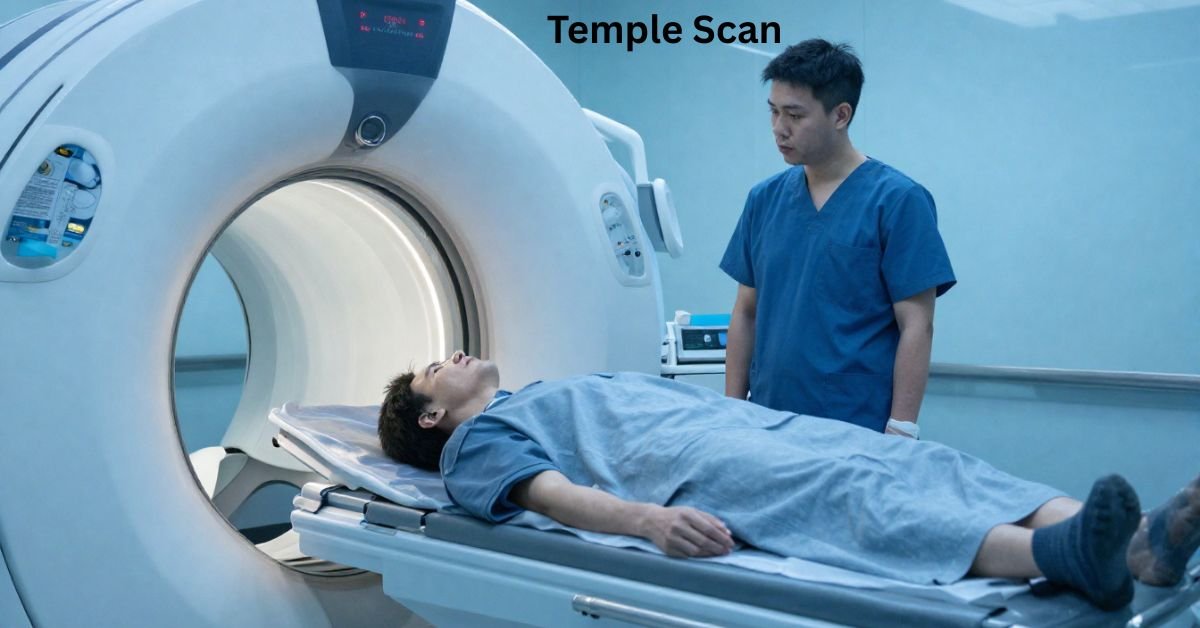
Most people are surprised at how simple the process is. A temple scan is painless and non-invasive. For a CT scan, you lie on a table that slides into a large circular machine. The scanner rotates around your head and takes pictures. You must stay still for clear images.
For an MRI, you lie on a table that moves into a tunnel-like machine. It makes loud tapping sounds, so you wear ear protection. The machine uses magnets, not radiation. The test usually does not require recovery time. You can go home right after it is finished.
Is It Safe?
Safety is one of the biggest concerns patients have. The good news is that modern imaging machines are much safer than older versions. CT scans use low levels of radiation. In 2026, improved machines reduce radiation exposure by up to 40% compared to older equipment. MRI and ultrasound do not use radiation at all.
Doctors only recommend a temple scan when the medical benefits are greater than the risks. For most people, the risk is very small. If you are pregnant or have metal implants, tell your doctor before the test.
Radiation Comparison
Understanding radiation levels can help you feel more comfortable.
Average Radiation Exposure (2026)
| Procedure | Radiation Dose (mSv) |
| Chest X-ray | 0.1 |
| Head CT | 1–2 |
| PET Scan | 5–7 |
| MRI | 0 |
As you can see, MRI does not use radiation. A head CT uses a small amount, but it is considered safe when medically needed. Hospitals follow strict safety rules set by national health authorities.
How Accurate is a Temple Scan in 2026?
Medical imaging has improved greatly in recent years. Many hospitals now use artificial intelligence (AI) to help doctors read images faster and more accurately. AI tools can detect tiny fractures or small areas of bleeding that may be hard to see. They also compare scans with large medical databases to find patterns.
Because of these advancements, a temple scan today is more reliable than ever before. Doctors still review every image carefully to confirm results. This combination of technology and expert review gives patients strong confidence in their diagnosis.
What to Expect Before and After
Before your appointment, you may be asked to remove jewelry, glasses, or hairpins. Metal can interfere with imaging. If contrast dye is needed, you might receive an injection to make certain areas clearer. Some people feel a warm sensation for a few seconds, which is normal.
During the test, staying still is very important. Movement can blur the pictures. After the temple scan, most people return to normal activities right away. Results are usually ready within one to two days. In an emergency, doctors may look at them right away.
Cost and Insurance in 2026
The cost depends on location, facility, and insurance coverage. Hospitals are usually more expensive than outpatient imaging centers. In the United States in 2026, a CT scan may cost between $800 and $1,500 without insurance. MRI may cost between $1,200 and $3,000. With insurance, patients often pay much less.
It is a good idea to call your insurance company before your appointment. Ask about in-network providers to reduce costs. Some clinics also offer payment plans for patients without insurance.
Common Conditions Found
A temple scan can help diagnose several medical issues. These include skull fractures, brain bleeding, tumors, infections, and inflammation of the temporal artery. It can also detect signs of stroke or swelling. For people over age 50 with severe side-of-head pain, doctors may check for a condition called giant cell arteritis.
Early diagnosis prevents vision loss. For younger patients, imaging is often used after sports injuries or accidents. When problems are found early, they can be treated more quickly and with better results.
The Future of Cranial Imaging
Technology keeps improving every year. In 2026, some ambulances will even carry portable CT scanners. This allows stroke patients to be diagnosed before they reach the hospital. Researchers are also testing higher-resolution MRI machines that provide extremely detailed images of brain tissue.
Cloud-based systems allow doctors in different cities to review scans together. This improves teamwork and second opinions. In the future, scanning may become even faster and more precise, helping doctors predict problems before symptoms get worse.
FAQs
Does a temple scan hurt?
No, it is painless and does not involve surgery.
How long does it take?
It can take between 5 and 45 minutes depending on the type.
Is it safe for children?
Yes, when medically needed and performed with proper safety settings.
Do I need special preparation?
Usually no, but remove metal objects and follow your doctor’s instructions.
How soon will I get results?
Within 24 to 48 hours, you can get most of the results.
Conclusion
A temple scan is an important medical tool that helps doctors look closely at the side of your head to find injuries, infections, tumors, or blood vessel problems. Thanks to modern technology in 2026, these scans are faster, clearer, and safer than ever before. Most treatments don’t hurt and don’t need much planning ahead of time. If your doctor recommends this imaging test, it is usually because the benefits outweigh the risks.
Understanding what happens during the scan and why it is needed can reduce fear and help you feel more confident. If you or a loved one has ongoing headaches, head injuries, or unusual symptoms on one side of the head, talk to a healthcare provider about whether a temple scan may be the right next step. Early diagnosis can make a big difference in treatment and recovery.